Vancouver gardens live in a narrow, beautiful margin between urban life and temperate rainforest. The light is soft, the rain predictable, and soil can be forgiving if you work with it rather than against it. For homeowners who want a garden to match a well-appointed interior, luxury landscaping in Vancouver BC means more than rare plants or a pristine lawn. It is a choreography of sightlines, texture, sound, and practical use across seasons. The difference between a garden that looks expensive and one that truly functions as a luxurious outdoor room lies in choices about material longevity, scale, and maintenance strategy.
Why upscale landscaping pays off here A well-designed luxury garden increases usable square footage, raises resale value, and changes how a property feels at every hour of the day. In Vancouver, where outdoor living is part of the city's culture, careful investment in landscaping often yields returns greater than the initial cost. High-end features — think a heated patio, integrated lighting, or a water feature with well-engineered circulation — reduce friction. They make it easier to entertain, to relax after work, and to use the yard through a damp spring or a mild winter evening.
I’ve installed several private gardens in Kitsilano and Point Grey where targets were understated; clients wanted privacy without feeling enclosed. The trick was layering: a low retaining wall to create a seating step, a ribbon bench that doubles as a planter edge, and recessed lighting that makes paths readable without glare. Those projects typically cost more upfront than a simple sod-and-shrub approach, yet homeowners reported using their gardens three to four times more in the first year, making the investment feel immediate.
Key considerations before choosing features Luxury features require a realistic maintenance budget. A handcrafted cedar pergola with climbing roses will charm visitors for years, but roses need pruning, disease management, and seasonal feeding. Similarly, water features and irrigation systems extend convenience but demand winterization and occasional servicing. Decide whether you want a low-touch garden, where high-quality materials age beautifully and plants are selected for robustness, or a high-touch show garden, where weekly care keeps everything immaculate.
Another decision is how much to invest in professional infrastructure. Use of a landscape architect or design-build firm pays off when dealing with complicated slopes, sightline issues, or drainage concerns. Poor drainage is the silent destroyer of many high-end installations; an elegant stone patio sits badly and shifts if base preparation is neglected. In Vancouver, where the average annual rainfall is roughly 1,200 to 1,600 mm depending on location, proper grading and drainage are non-negotiable.
Five luxury features worth the cost
Heated outdoor living surfaces and underfloor patio heating, ideal for early spring and late fall use. Integrated water feature with recirculating pump, UV filtration, and low-noise equipment placement. Custom outdoor kitchen with built-in refrigeration, weatherproof cabinetry, and gas fixtures plumbed to code. Intelligent lighting design that includes layered illumination, low-voltage fixtures, and automated controls for scenes. Privacy structures that double as sculptural elements, such as corten steel screens, louvered pergolas, or planted green walls.Each of these items raises the bar in different ways. Heated patios lengthen the season, turning March into usable time. A well-equipped outdoor kitchen converts casual barbecues into year-round hospitality. Integrated lighting not only extends usable hours but also amplifies perceived space through selective illumination. Water features soften sound, adding a sensory layer that masks distant traffic or neighbors. Privacy structures are as much about scale as screening; an elegant corten screen can be a piece of art that controls views without feeling defensive.
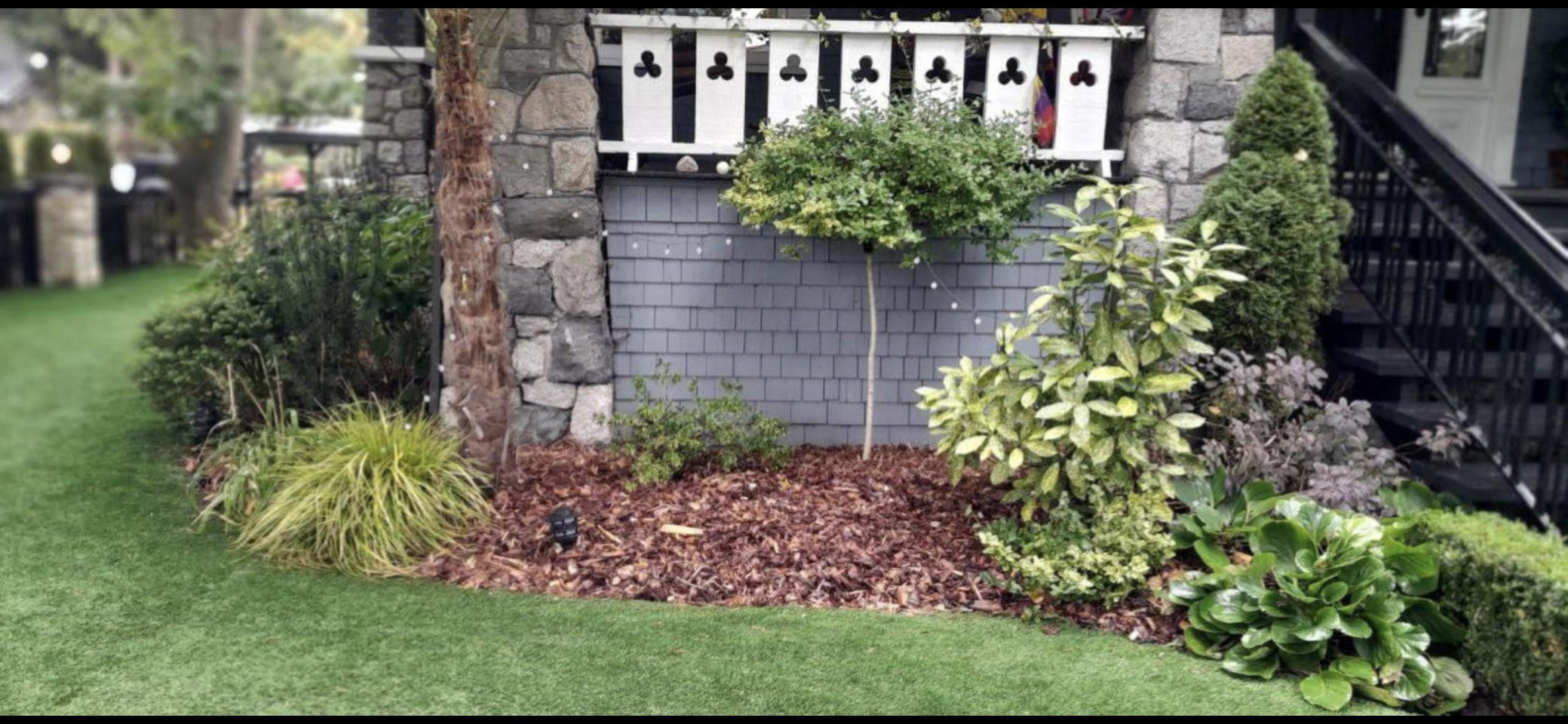
Material choices and local climate realities Hardscape materials must balance beauty with slip resistance and freeze-thaw resilience. Natural stone like granite or basalt slabs gives a luxurious look and resists staining, but be mindful of surface finish; a honed finish can become slick when wet. Porcelain pavers are a modern alternative that resists frost and staining, offers consistent sizing for tight joints, and supports radiant heat. For decking, tropical hardwoods were once the obvious choice, but sustainably sourced cedar or composite boards are more pragmatic in Metro Vancouver because they stand up better to frequent moisture.
Plant selection should prioritize evergreen structure for winter interest, layered underplanting for texture, and Landscaping Services Greater Vancouver BC blooms timed to extend color from March through October. Iconic choices that flourish here include Japanese maple cultivars for canopy drama, rhododendrons and azaleas for spring impact, and native sword ferns for shaded underlayers. Lavender and sedum work well in sunnier, drier spots; moss and shade-loving groundcovers perform where lawns struggle. Consider microclimates: a south-facing wall heats up enough to host tender specimens, while north-facing corners stay cool and moist.
Water features the right way A fountain or reflecting pool becomes a liability without thoughtful engineering. Pumps should be oversized for the head pressure they meet and isolated from sightlines to keep mechanical noise out of the experience. I prefer systems with built-in prefilters and UV clarifiers because they reduce maintenance time and chemical needs. Circulation should be continuous where freezing is unlikely, and easily drained or winterized where ice is a risk.
Placement matters. A water feature near an outdoor living area offers sensory benefits, but keep it 1.5 to 3 meters from dining tables to avoid splash and insect congregation. For small yards, a narrow, linear rill that flows along a pathway provides movement and sound without consuming valuable floor area. Use native aquatic plants sparingly for visual softness and biological filtration.
Lighting that reads like daylight but never glares Landscape lighting is often treated as an afterthought, then retrofitted with too-bright flood lamps. Luxury lighting begins with a plan drawn to scale, considering sightlines from interior rooms and adjacent streets. Layered lighting means three functional tiers: ambient illumination for safe movement, task lighting for cooking and dining, and accent lighting for specimen plants or architectural features.
Choose warm color temperatures, 2700 K to 3000 K, to maintain a cozy feel. Employ shields and backlighting to prevent light trespass into neighbors’ windows. Use low-voltage LED fixtures for energy efficiency and dimmable drivers for scene setting. Automation adds polish; timers and wireless control systems let you create arrival scenes, dinner scenes, and nighttime security lighting with a tap on your phone or a single switch.
Privacy and screening with design intent In Vancouver, privacy often competes with views. A smart approach preserves desirable sightlines while creating intimate spaces. Use staggered plantings that start dense at eye level and open up above to preserve sky and distant views. A layered screen of evergreen shrubs, ornamental grasses, and a high, narrow tree can feel more graceful than a flat fence. Consider green walls in small properties; modular systems with built-in irrigation make living walls practical rather than maintenance-heavy.
For larger properties, sculptural screens provide a visual focal point. Corten steel, laser-cut panels, and horizontal cedar slats all weather well if detailed correctly. Plan for attachment points, drainage, and potential staining of adjacent materials. Where neighbors are close, acoustic fencing augmented with mass-loaded barriers can reduce street noise and create a quiet private room.
Sustainable luxury: systems that save money and align with local values Luxury and sustainability are not opposites. High-end gardens can incorporate efficient irrigation controllers, rainwater capture, and native plant palettes that reduce input needs. Drip irrigation combined with soil moisture sensors cuts water use dramatically compared with conventional sprinkler systems. Rain gardens and bioswales manage stormwater on-site, reducing runoff and helping local streams. Solar-powered lighting reduces wiring needs and long-term electricity costs when fixtures are specified to match Vancouver’s winter light conditions realistically.
I installed a project in East Vancouver where we combined a 2,000-litre rain barrel, a sub-surface irrigation manifold, and a weather-based controller. Annual potable water usage for irrigation dropped by about 60 percent. The initial premium for the hardware was offset by lower water bills and a marked reduction in summer irrigation time and worry.
Outdoor kitchens and entertaining infrastructure Practical luxury in landscaping is often about letting people cook, eat, and socialize outside without improvisation. A well-executed outdoor kitchen includes durable countertops like granite or porcelain, weatherproof storage, propane or natural gas hookups installed to code, and a small built-in sink for quick cleanup. Include refrigeration if you plan multi-course gatherings. Storage for cushions and linens should be integrated so furniture remains ready to use.
Think about circulation. Provide a straight, unobstructed line from the kitchen to the dining area and make sure serving heights align with plates and seating. Plan for waste management with a covered bin and consider where service electrical outlets will go, both for convenience and code compliance.
Maintenance realities and realistic budgets When budgeting, assume that truly low-maintenance landscapes still need attention. For a high-end garden, include an annual maintenance contract in your financial modeling. This usually covers pruning, feeding, irrigation checks, and seasonal cleanups. Expect to pay, in Metro Vancouver, a reliable maintenance crew roughly CA$3,000 to CA$8,000 per year for a medium-sized luxury garden, depending on plant complexity and features like fountains or irrigation systems.
Hardscape warranties and contractor selection are crucial. Get references, view recent installations in person, and ask for a written scope with materials specified. A warranty on workmanship for at least one year, with clear exclusions listed, protects both parties.
Edge cases and trade-offs to consider Small urban lots call for vertical thinking. A large water feature or sprawling lawn can overwhelm; instead, plant-rich pocket gardens, built-in seating, and compact fire features create intimacy. For sloping sites, terraces with retaining walls add usable platforms but increase cost and require engineering. In heritage neighborhoods, check local bylaws for limits on fence heights and materials.
If you prioritize biodiversity, accept that tidier lines may be less friendly to pollinators. Let some edges be wilder, with native hedgerow patches for birds and insects, while maintaining cleaner lines around seating and paths. Similarly, if absolute zero-maintenance is your goal, favor high-quality composites, engineered stone, and drought-tolerant plant palettes over delicate ornamentals.
Working with professionals Hiring a design-build firm such as Luxy Landscaping or a landscape architect pays when projects require coordination among trades. A single point of responsibility reduces surprises and ensures that structural, mechanical, and aesthetic elements align. Expect an initial design fee that typically ranges, for detailed conceptual plans and planting, from CA$3,000 to CA$10,000 depending on scale. After design, construction budgets for luxury yards commonly start in the mid five figures and grow with the addition of custom features.
Ask potential firms about their experience with Vancouver-specific challenges: erosion control, permitting for retaining walls over a certain height, and neighbor notification rules for large builds. A thoughtful contractor anticipates these issues and includes garden services Greater Vancouver them in the timeline and budget.
Final thoughts on making it your own A garden becomes luxurious when it reflects how you live rather than copying a magazine spread. Prioritize the features you will use daily, not just those that photograph well. If morning coffee is sacred, design for shelter and a decent surface for a small table near a sunny spot. If you entertain large groups, invest in circulation, seating, and a weatherproof kitchen. Luxury is the freedom to use a space without friction, and in Vancouver that often means prioritizing durability, drainage, and flexible heating or shelter so the yard is useful beyond three summer months.
Choose materials that patina with dignity, plant varieties that thrive in local conditions, and systems that reduce ongoing effort. With the right planning and sensible trade-offs, landscaping in Vancouver BC can transform a property into an outdoor retreat that feels both effortless and undeniably refined. Luxy Landscaping and similar local firms can guide the technical details, but the best gardens always begin with a clear sense of how the space should feel, day after day.
Luxy Landscaping
1285 W Broadway #600, Vancouver, BC V6H 3X8, Canada
+1-778-953-1444
[email protected]
Website: https://luxylandscaping.ca/